
Neurotherapy for Children: A Parent's Complete Guide
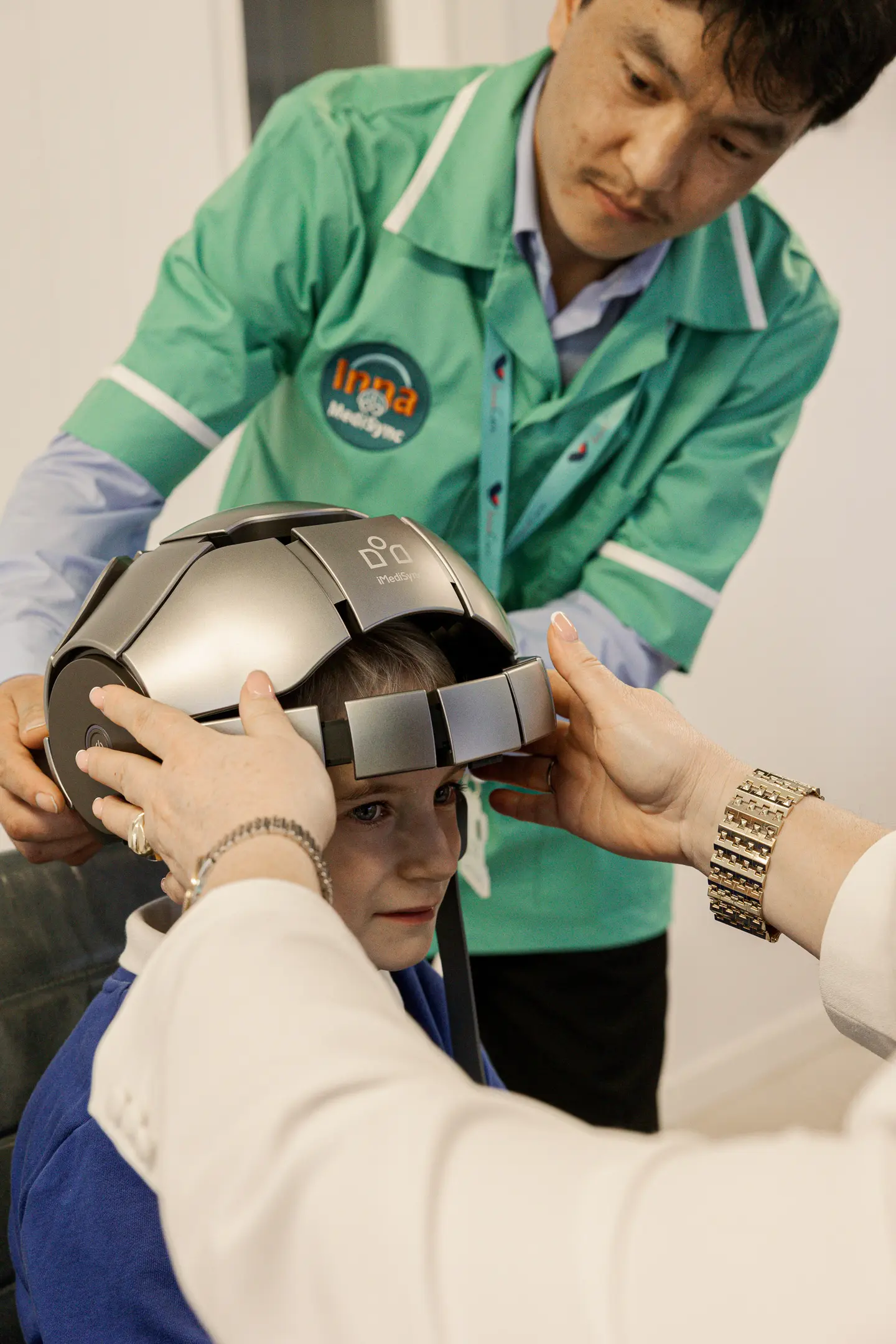
Is Neurotherapy Safe for Children?
This is almost always the first question parents ask, and rightly so. The reassuring answer is that neurofeedback — the primary modality used in neurotherapy — is a non-invasive technique that has been studied in paediatric populations for decades.
During a session, small sensors are placed on the scalp to read electrical activity. Nothing is sent into the brain. The sensors are passive — they listen, they do not transmit. There are no medications, no electrical stimulation, and no sedation. Your child sits comfortably, typically watching an animation or playing a simple game, while their brainwave patterns are gently guided through real-time feedback.
Research published in peer-reviewed journals has examined neurofeedback in children as young as four years old. Studies suggest that when delivered by trained clinicians using validated protocols, neurofeedback carries minimal risk. The most commonly reported side effect is mild tiredness after a session — much like the feeling after concentrating hard on a school task.
Neurofeedback does not put anything into your child's brain. It reads what is already there and helps the brain learn to regulate itself more effectively.
How Children's Neurotherapy Differs from Adult Sessions
While the underlying science is the same, working with children requires a fundamentally different approach. At Inna MediSync, our children's programmes are designed around the reality that a seven-year-old's attention span, emotional needs, and communication style differ entirely from an adult's.
- Session length — shorter sessions, tailored to the child's age and ability to sustain focus
- Engagement methods — age-appropriate animations and games that make the process feel like play, rather than abstract data screens
- Communication — everything is explained in language the child understands, and we never force a child to continue if they are uncomfortable
- Parent involvement — parents are welcome to stay in the room throughout the session
- Protocol selection — children's brains are still developing, so protocols account for age-appropriate brainwave patterns. What looks atypical in an adult may be perfectly normal in a developing brain
Conditions We Commonly See in Children
Attention and focus difficulties
Many children struggle with sustained attention, impulsivity, or restlessness. Research suggests that neurofeedback may help children develop improved self-regulation of attention. Several studies have examined it as a complementary approach for ADHD and focus challenges, with some showing improvements maintained at follow-up.
Anxiety and emotional regulation
Children who experience persistent worry, separation anxiety, or difficulty managing big emotions may benefit from training that targets the brain's stress-response networks. Many parents report that their children become calmer and more resilient over the course of a programme.
Sleep difficulties
Difficulty falling asleep, frequent night waking, or restless sleep can significantly affect daytime behaviour, mood, and learning. Neurofeedback protocols that promote calmer brainwave patterns have been studied in the context of sleep improvement.
Autism spectrum
Some families seek neurotherapy as part of a broader support plan for children on the autism spectrum. While neurofeedback is not a protocol for addressing autism itself, research suggests it may help with associated challenges such as sensory processing and emotional regulation.
What a Session Looks Like for Your Child
Arrival and settling in
We allow a few minutes at the start for your child to settle into the environment. The therapy room is designed to feel comfortable and unthreatening — no clinical white walls or intimidating equipment. Your child can sit in a comfortable chair, and you are welcome to sit nearby.
Sensor placement
Small sensors are placed on specific locations on your child's scalp using a water-soluble paste. This is entirely painless — it feels similar to having a small sticker placed on the skin. Children are often curious about this process, and we encourage them to ask questions.
The training itself
Your child watches an animation or plays a game on screen. The animation responds in real time to their brainwave activity. When their brain produces the target patterns, the animation runs smoothly and rewards appear. When it drifts away, the feedback changes subtly — perhaps the screen dims or the animation slows.
Children do not need to consciously understand what they are doing. The brain responds to the feedback automatically, gradually learning to produce more of the desired patterns. Many children simply think they are playing a game.
After the session
The sensors are removed, the paste is easily wiped away, and your child is free to go about their day. Some children feel a little tired afterwards; others feel energised. Both responses are normal.
The most common thing we hear from children after their first session is: "Can I come back tomorrow?" When the process feels like play, engagement comes naturally.
How to Prepare Your Child
- Explain honestly and simply. You might say: "We are going to visit someone who looks at how your brain works. They will put some small stickers on your head and you will get to watch cartoons. It does not hurt at all."
- Avoid over-explaining. Young children do not need to understand the science. Older children may appreciate more detail, which we can provide during the session.
- Wash hair beforehand. Clean hair free from products helps sensors make good contact. Avoid conditioner, gel, or styling products on the day.
- Ensure your child is rested and fed. We want to see your child's brain at its typical baseline, not when it is depleted.
- Bring a comfort item if needed. A favourite toy or blanket is absolutely welcome.
What Parents Can Expect
Most children's programmes involve 20 to 40 sessions, scheduled once or twice per week. Progress is not always linear. Some parents notice changes within the first few sessions — often in sleep quality or general calmness. Other improvements, particularly in attention, may become apparent more gradually.
We track progress objectively through periodic brain maps that show how your child's brainwave patterns are changing. Throughout the programme, you will receive regular updates, and we welcome your observations from home and school. For more details, visit our frequently asked questions page.
When to Consider Neurotherapy
Parents often consider neurotherapy when:
- Their child is struggling despite other interventions or support
- They want a non-medication option, as an alternative or complement to existing approaches
- School reports consistently highlight attention, behaviour, or emotional regulation concerns
- Sleep difficulties are affecting the whole family
- They want to understand what is happening in their child's brain before deciding on a course of action
A brain mapping assessment can be a valuable starting point even if you are unsure about a full programme. The brain map provides objective data that can inform your decision-making, whether or not you proceed with training.
For some children, particularly those with ADHD or attention difficulties, Photobiomodulation (PBM Care) may be recommended alongside neurofeedback. PBM Care uses gentle near-infrared light to support brain cell energy production and is non-invasive and painless. At Inna MediSync, we work with children from 4 years old, with session durations carefully adapted to each child's age and needs.
Start with a conversation
Every child is different, and we understand that exploring neurotherapy is a significant step. If you have questions or want to learn more about our children's programme at Inna MediSync in Romford, we are here to help. Contact us to arrange an initial consultation where we can discuss your child's needs and whether neurotherapy is the right fit for your family.
Inna MediSync Clinical Team
Neurotherapy Specialists
The Inna MediSync clinical team brings together certified neurotherapy practitioners with expertise in QEEG brain mapping and neurofeedback. Every article is reviewed for clinical accuracy and reflects our commitment to evidence-informed practice.
Continue Reading

Ready to Explore Neurotherapy?
Take the first step towards understanding your brain. Book a free consultation with our clinical team.