
What Is Neurofeedback? A Complete Guide

What Is Neurofeedback? A Complete Guide
If you have been searching for a drug-free, non-invasive approach to improving how your brain functions, you have likely come across the term neurofeedback. Perhaps your GP mentioned it, a friend recommended it, or you found it while researching options for ADHD, anxiety, or sleep difficulties. Whatever brought you here, this guide will give you a thorough, evidence-informed understanding of what neurofeedback is, how it works, and whether it might be right for you.
What Is Neurofeedback?
Neurofeedback is a form of biofeedback that focuses specifically on brainwave activity. During a session, sensors placed on the scalp measure your brain's electrical patterns in real time. This information is fed back to you through a visual or auditory display, typically a film, animation, or game, allowing your brain to learn to regulate itself more effectively.
Think of it as a mirror for your brain. Just as you use a mirror to correct your posture, neurofeedback provides your brain with moment-by-moment information about its own activity, encouraging it to move towards healthier, more balanced patterns.
The formal term is EEG biofeedback, and it has been used in clinical and research settings since the 1960s. Over the past two decades, advances in technology and a growing body of research have made it increasingly accessible to the general public through specialist clinics like ours.
How Does Neurofeedback Work?
Your brain communicates through electrical impulses, producing different types of brainwaves depending on what you are doing and how you are feeling. These brainwaves fall into frequency bands:
- Delta (0.5-4 Hz) — deep sleep and restoration
- Theta (4-8 Hz) — drowsiness, creativity, and deep relaxation
- Alpha (8-12 Hz) — calm wakefulness and relaxation
- Beta (12-30 Hz) — active thinking, focus, and alertness
- Gamma (30+ Hz) — higher-order processing and cognitive function
When these brainwave patterns become dysregulated, whether through too much activity in one area, too little in another, or poor communication between regions, it can manifest as difficulties with attention, mood, sleep, anxiety, or cognitive performance.
During a neurofeedback session, the software monitors your brainwave activity and provides feedback when your brain moves towards more optimal patterns. When your brain produces the desired pattern, the film plays smoothly or you score points in a game. When it drifts away, the feedback pauses or dims. Over time, through this process of operant conditioning, your brain learns to self-regulate more efficiently.
Neurofeedback does not put anything into your brain. It simply provides information that allows your brain to reorganise itself. The brain does the work.
The Evidence Base
Neurofeedback has been the subject of extensive research over several decades. The evidence base varies by condition, but several areas have attracted particularly strong interest:
ADHD is the most researched application. Multiple randomised controlled trials and meta-analyses suggest that neurofeedback can produce significant improvements in attention, impulsivity, and hyperactivity. The American Academy of Pediatrics has rated neurofeedback as a Level 1 "Best Support" intervention for ADHD, the highest evidence rating. You can read more about this in our article on neurofeedback for ADHD.
Anxiety and stress have also been widely studied. Research suggests that neurofeedback can help reduce overactivation in brain regions associated with the stress response, with many clients reporting meaningful reductions in anxiety symptoms. Learn more about our anxiety and stress programme.
Sleep difficulties, depression, trauma, and peak performance are additional areas where a growing body of evidence supports the use of neurofeedback as part of an integrated approach.
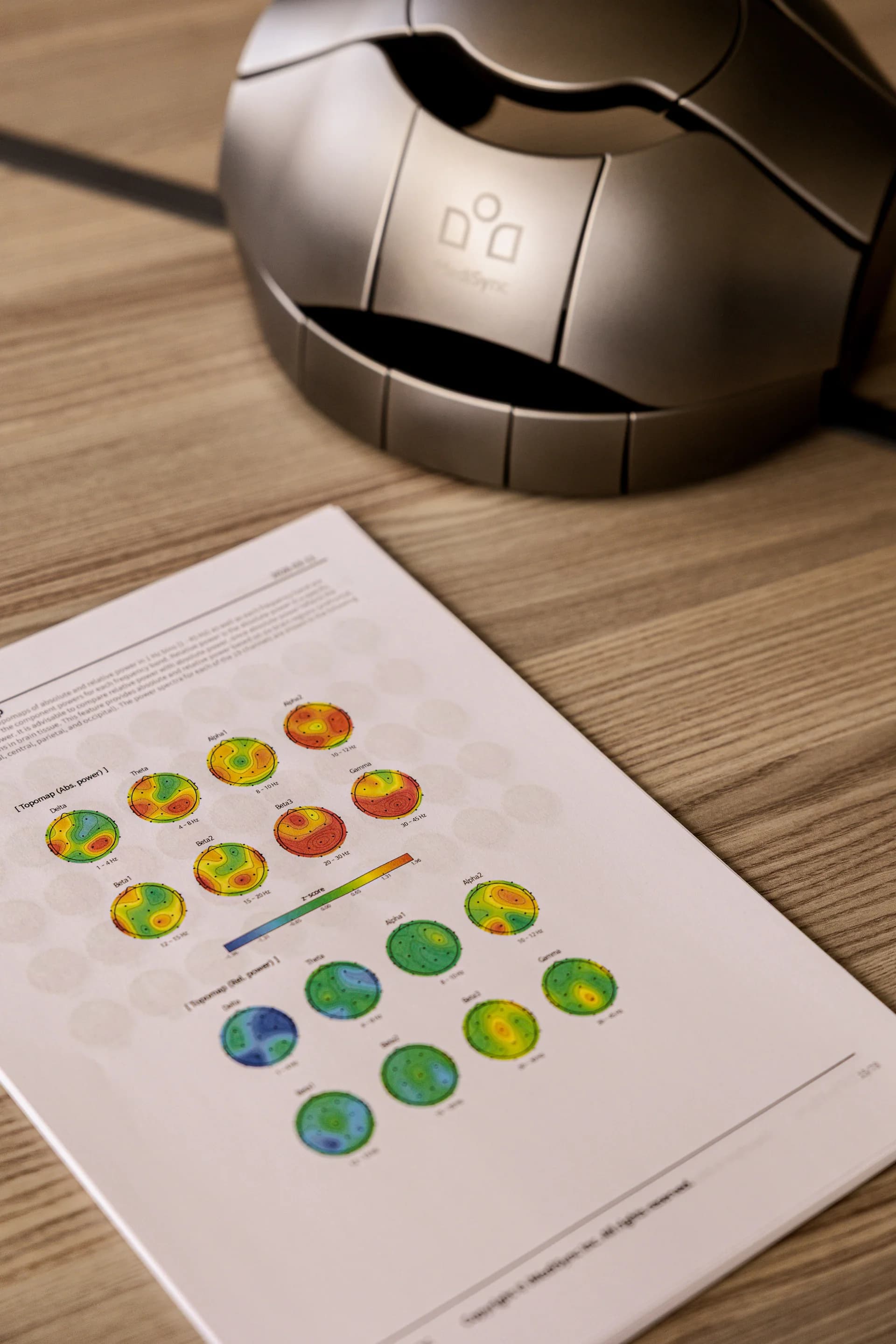
It is important to note that neurofeedback is not a cure-all, and outcomes vary from person to person. We always recommend an initial brain map (QEEG assessment) to identify your unique brainwave patterns before designing a personalised training programme.
Who Can Benefit from Neurofeedback?
Neurofeedback is used by a wide range of people, from children experiencing attention difficulties to adults managing workplace stress, and from athletes seeking a competitive edge to older adults looking to maintain cognitive sharpness. Common areas where people seek neurofeedback include:
- Attention and focus difficulties (including ADHD)
- Anxiety and chronic stress
- Sleep problems and insomnia
- Low mood and depression
- Trauma and PTSD
- Migraines and headaches
- Cognitive decline and brain fog
- Peak performance in sport, business, or the arts
Neurofeedback is suitable for children and young people as well as adults. Because it is non-invasive and does not involve medication, many families see it as a particularly attractive option for younger clients.
What Happens During a Session?
A typical neurofeedback session lasts around 45 to 60 minutes, though the actual training portion is usually about 30 minutes. Here is what you can expect:
- Preparation: Small sensors are placed on your scalp using a conductive paste. This is painless and non-invasive.
- Baseline recording: A brief recording captures your current brainwave activity.
- Training: You watch a film, listen to music, or play a simple game. The software adjusts the feedback in real time based on your brainwave patterns.
- Review: After the session, your practitioner reviews the data with you and may adjust the training protocol for next time.
Most people find sessions relaxing and even enjoyable. You simply sit comfortably and let your brain do the learning. There is no need to consciously "try" to change anything; the process works at a subconscious level.
A typical course of neurofeedback involves 20 to 40 sessions, depending on the individual and the goals of training. Many people begin to notice changes within the first 10 sessions, though lasting results generally require completing the full programme. Visit our pricing page for details on session packages.
Is Neurofeedback Safe?
Neurofeedback has an excellent safety profile. It is non-invasive, drug-free, and does not involve any electrical stimulation of the brain. The sensors only read brainwave activity; they do not send any signal into the brain.
Side effects are rare and typically mild. Some people report temporary tiredness or a mild headache after a session, similar to how you might feel after an intense learning experience. These effects usually resolve within a few hours.
Because neurofeedback is training-based rather than treatment-based, it works with your brain's natural capacity to learn and adapt. This is one of the reasons it is considered safe for people of all ages, including children.
Neurofeedback is recognised by regulatory bodies worldwide. In the UK, it is practised by qualified professionals who adhere to strict clinical protocols and ethical standards.
Key Takeaways
- Neurofeedback is a non-invasive, drug-free approach that trains your brain to function more effectively.
- It works by providing real-time feedback on your brainwave activity, allowing your brain to self-correct.
- The strongest evidence base exists for ADHD, with growing research supporting its use for anxiety, sleep, depression, and other conditions.
- Sessions are comfortable, painless, and suitable for all ages.
- A brain map (QEEG) is recommended before starting to ensure the training is personalised to your needs.
- Most programmes involve 20 to 40 sessions for lasting results.
Ready to Learn More?
If neurofeedback sounds like it could be the right approach for you or someone you care about, the best place to start is with a comprehensive brain map assessment at Inna MediSync. This gives us a detailed picture of your brain's current patterns and allows us to design a personalised neurofeedback programme tailored to your specific needs. Based at our private clinic in Romford, Essex, we welcome clients from across London and the surrounding area. To book your initial consultation or ask any questions, please get in touch with our team.
Inna MediSync Clinical Team
Neurotherapy Specialists
The Inna MediSync clinical team brings together certified neurotherapy practitioners with expertise in QEEG brain mapping and neurofeedback. Every article is reviewed for clinical accuracy and reflects our commitment to evidence-informed practice.
Continue Reading

Ready to Explore Neurotherapy?
Take the first step towards understanding your brain. Book a free consultation with our clinical team.