
Sleep Disorders
Retrain Your Brain for Better Sleep
Poor sleep is rarely just a habit problem — it is often a brain regulation problem. Neurofeedback trains the neural patterns that govern sleep onset, depth, and quality, offering a path to better rest without medication dependency.
Adding life to years.
Human care powered by advanced clinical technology.
Why Your Brain Struggles to Sleep
Healthy sleep depends on the brain's ability to transition smoothly between states of wakefulness and rest. This process is governed by specific brainwave patterns: sensorimotor rhythm (SMR) activity at the central cortex, appropriate theta and delta production during sleep onset, and the generation of sleep spindles that protect deep sleep. When these patterns are disrupted, sleep suffers.
QEEG brain mapping can reveal the precise nature of your sleep dysregulation. Common findings include deficient SMR activity (making it harder for the brain to "idle" towards sleep), excess high-beta activity (the brain remains in an alert, anxious state), or insufficient delta wave production (preventing deep, restorative sleep stages).
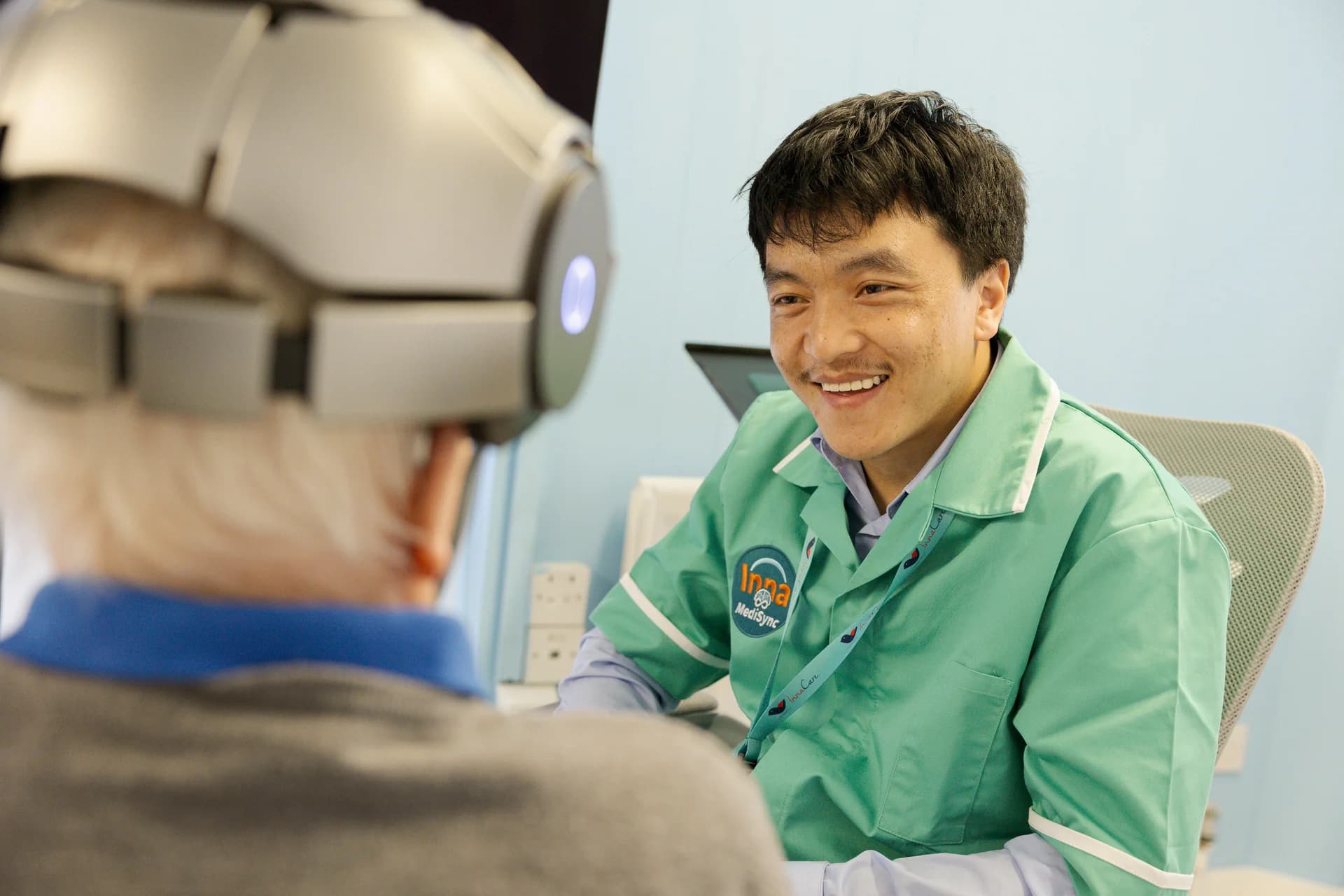
Neurofeedback addresses these imbalances directly. By training the brain to produce healthier patterns of SMR, theta, and delta activity during 30 to 45 minute daytime sessions, it supports the natural transitions your brain needs to fall asleep, stay asleep, and wake feeling genuinely restored — without the dependency risks associated with sleep medication. Neurofeedback is designed to improve sleep quality through operant learning, helping your brain establish healthier patterns over a programme of sessions.
How Neurofeedback Improves Sleep
SMR Training for Sleep Readiness
Sensorimotor rhythm (SMR) training at the central cortex is one of the most established neurofeedback protocols for sleep. Enhanced SMR production helps the brain transition from alertness to a calm, sleep-ready state.
Reducing Hyperarousal
Many sleep problems are driven by an overactive brain that cannot "switch off." Neurofeedback trains the brain to reduce excess high-beta activity, calming the cortical arousal that prevents sleep onset.
Supporting Deep Sleep Architecture
Delta waves are the hallmark of deep, restorative sleep. When delta production is insufficient, sleep feels light and unrefreshing. Neurofeedback can support healthier delta patterns, improving sleep depth and quality.
No Medication Dependency
Unlike sleep medication, neurofeedback works by retraining the brain's own regulatory mechanisms. The improvements are driven by neuroplasticity, meaning they tend to persist after training is complete.
Ready to find out if this approach is right for you? Our clinical team can guide you.
What to Expect
Assessment
A QEEG brain map identifies the specific brainwave patterns disrupting your sleep — whether SMR deficits, hyperarousal, or delta insufficiency.
QEEG · 60–90 minProtocol Design
Your clinician designs a personalised protocol targeting the neural patterns responsible for your sleep difficulties. Sleep protocols vary significantly between individuals.
Personalised · Sleep-FocusedTraining Sessions
Comfortable 30–40 minute daytime sessions where your brain learns to produce the patterns needed for healthy sleep. Many clients find they begin sleeping better within the first few weeks.
30–40 min · DaytimeProgress Review
Regular reviews combine objective brain data with your subjective sleep experience. Sleep diaries and optional re-mapping help track your progress accurately.
Tracked · ComprehensiveWhat Does the Evidence Show?
Results vary by individual. Neurofeedback is not a substitute for professional assessment of sleep disorders by your GP or specialist.
Who Can Benefit?
Neurofeedback for sleep is suitable for individuals who experience chronic sleep difficulties that have not responded adequately to sleep hygiene measures or who prefer a non-pharmaceutical approach. It can also complement existing protocols.
Not sure if it's right for you?
Book a private 15-minute phone consultation. Our clinical team will listen carefully and advise whether this is the appropriate path for you.
Frequently Asked Questions
Ready for restorative sleep?
Book a QEEG brain map and sleep consultation at our private Romford clinic. Understand why your brain struggles to rest — and start training it to sleep better.