
How Neurofeedback Can Help with Anxiety
How Neurofeedback Can Help with Anxiety
Anxiety is one of the most common mental health difficulties in the UK, affecting millions of people in ways that range from a persistent background hum of unease to debilitating panic attacks, social withdrawal, and chronic physical symptoms. If you have tried medication, therapy, or lifestyle changes and are still struggling, or if you are looking for a non-medication approach from the outset, understanding what neurofeedback can offer is a worthwhile investment of your time.
Understanding Anxiety from a Brain Perspective
While anxiety is often discussed in psychological terms, worry, catastrophic thinking, avoidance, it is fundamentally a brain-based experience. Every anxious thought and every physical symptom of anxiety has a neurological signature.
Research in neuroscience has identified several key brain dynamics associated with anxiety:
- An overactive amygdala: The amygdala is the brain's alarm system. In people with anxiety, it can become hypervigilant, triggering the fight-or-flight response in situations that do not genuinely warrant it.
- Reduced prefrontal regulation: The prefrontal cortex is responsible for rational thought, planning, and calming the amygdala's alarm signals. When this region is underactive or poorly connected, the brake on anxiety is less effective.
- Dysregulated brainwave patterns: Specific patterns of electrical activity, measurable by EEG, have been associated with anxiety states. These include excessive high-beta activity (associated with rumination and overthinking), frontal alpha asymmetry (linked to withdrawal tendencies and low mood), and reduced sensorimotor rhythm activity (associated with difficulty calming the body).
This neurological perspective is not intended to reduce your experience to mere brain chemistry. Rather, it offers a pathway to understanding why anxiety can feel so difficult to control through willpower alone, and why approaches that work directly with the brain can be so valuable.
What Anxiety Looks Like on a Brain Map
One of the most powerful aspects of the brain mapping (QEEG) process is that it allows us to see anxiety objectively. For many people, this is the first time their internal experience has been validated by external, measurable data.
Common brain map findings in individuals with anxiety include:
- Excessive high-beta activity (20-30 Hz): Associated with an overactive mind, racing thoughts, and difficulty switching off, even when there is nothing specific to worry about.
- Frontal alpha asymmetry: Greater right-frontal alpha activity relative to the left, linked to withdrawal motivation and negative affect. Commonly observed alongside low mood.
- Elevated theta in posterior regions: Slow-wave activity at the back of the brain, associated with poor sensory processing and feelings of overwhelm.
- Poor coherence between regions: Disrupted communication pathways that prevent the brain from coordinating an appropriate stress response, often resulting in exaggerated anxiety reactions.
Seeing your anxiety on a brain map can be a turning point. It confirms that what you are experiencing is real, measurable, and, importantly, changeable.
How Neurofeedback Helps
Neurofeedback addresses anxiety by training the brain to shift away from the dysregulated patterns described above and towards calmer, more balanced activity. It does not suppress emotions or numb you. Instead, it helps your brain develop the regulatory capacity to respond to stress proportionately, rather than with the excessive activation that characterises anxiety.
The specific training protocols used will depend on your brain map findings, but common approaches for anxiety include:
- High-beta reduction: Training the brain to produce less of the fast, agitated brainwave activity associated with rumination and overthinking
- Alpha enhancement: Encouraging calm, present-moment awareness by increasing alpha activity, particularly in the frontal regions
- SMR training: Strengthening the sensorimotor rhythm (12-15 Hz) to promote a state of calm focus and reduce physical tension
- Coherence training: Improving communication between brain regions so that the rational, regulatory parts of the brain can more effectively calm the alarm centres
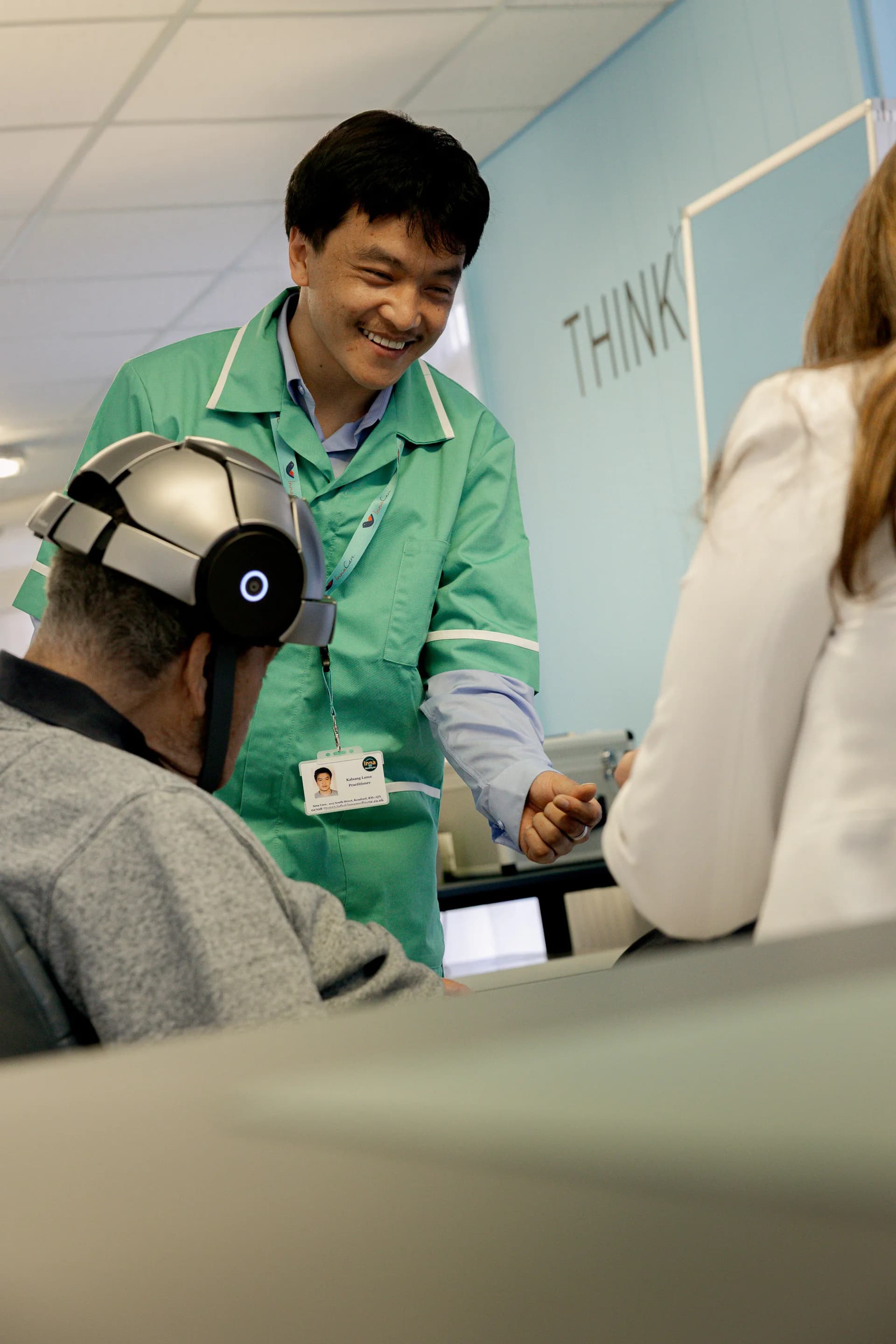
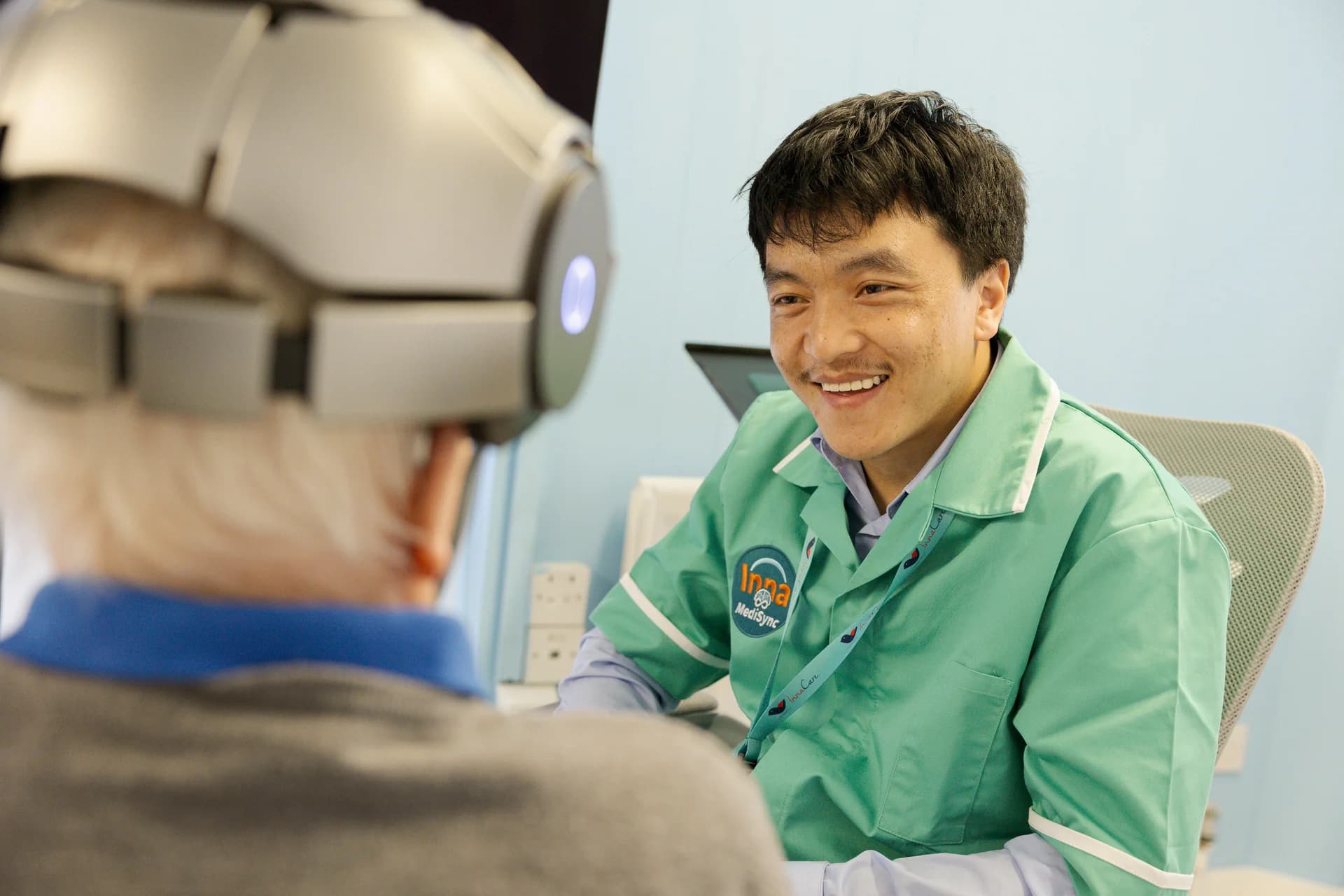
During a session, you sit comfortably watching a film or listening to music. When your brain produces the desired pattern, the media plays normally. When it drifts, the feedback subtly dims. Your brain learns without you needing to consciously "try," which is precisely why it can be effective for anxiety, a condition that resists conscious attempts at control.
The Evidence
Research into neurofeedback for anxiety has grown substantially in recent years. While the evidence base is not as extensive as for ADHD, it is building in a consistent and encouraging direction.
A systematic review by Hou et al. (2021) concluded that neurofeedback showed promise for anxiety disorders, with most studies reporting significant symptom reductions. Alpha-theta and SMR training were the most effective protocols. Research by Kerson et al. (2009) found reduced scores on standardised anxiety measures, with improvements maintained at follow-up.
Generalised anxiety, social anxiety, performance anxiety, and trauma-related anxiety have all been the subject of published research with positive findings. Many clinicians report that clients with anxiety are among the most responsive to neurofeedback, often noticing changes within the first ten sessions.
More large-scale, sham-controlled trials are needed. However, the existing evidence, combined with decades of clinical experience, supports neurofeedback as a meaningful option for people with anxiety.
What a Course of Sessions Looks Like
If you are considering neurofeedback for anxiety, here is what a typical journey involves:
- Initial brain map: A QEEG assessment identifies your specific brainwave patterns and guides the training protocol. This is the essential first step.
- Training sessions: A standard course for anxiety typically involves 20 to 30 sessions, attended two to three times per week. Each session lasts approximately 45 to 60 minutes.
- Early shifts: Many clients report subtle changes within the first five to ten sessions. These often begin with improved sleep quality, a slight reduction in the intensity of anxious thoughts, or a feeling of being more "present" and less caught up in worry loops.
- Progressive improvement: As training continues, these initial shifts tend to deepen. Clients commonly describe a growing sense of inner calm, better emotional resilience, and a reduced tendency to catastrophise.
- Consolidation and follow-up: The final sessions consolidate the changes. A follow-up brain map can objectively demonstrate how your brain patterns have shifted, which many clients find deeply reassuring.
Visit our pricing page for information on session packages and options.
Complementary Approaches
Neurofeedback works well alongside other evidence-informed approaches to anxiety. We encourage a holistic view that considers all the factors contributing to your wellbeing:
- Talking therapies: CBT, ACT, and other approaches complement neurofeedback well. Therapy provides psychological tools while neurofeedback addresses the underlying neurological patterns.
- Medication: Neurofeedback can be used alongside anxiety medication. Some clients find they can discuss a gradual reduction with their prescribing clinician as self-regulation improves.
- Lifestyle factors: Regular exercise, good sleep hygiene, reduced caffeine, and mindfulness all support brain health and enhance neurofeedback benefits.
- Breathing and relaxation: These engage the parasympathetic nervous system and complement neurofeedback's regulatory effects.
You do not have to choose between neurofeedback and other approaches. Many of our clients find that combining neurofeedback with therapy and lifestyle changes produces the most comprehensive and lasting results.
Take the First Step
Alongside neurofeedback, Photobiomodulation (PBM Care) can offer additional support for anxiety by targeting cellular energy production and neuroinflammation. At Inna MediSync, both approaches are available through the iSyncMe device and can be combined into a personalised programme tailored to your brain's specific patterns.
Living with anxiety can be exhausting, isolating, and deeply frustrating, especially when you have already tried other approaches without finding lasting relief. Neurofeedback offers a different pathway, one that works directly with your brain's electrical activity to build the regulatory capacity that anxiety disrupts. If you would like to explore whether neurofeedback could help with your anxiety, we invite you to begin with a brain map assessment or to explore our dedicated anxiety and stress programme. Based at our private clinic in Romford, Essex, Inna MediSync welcomes clients from across London. Contact us to have a confidential conversation about your situation — no obligation and no pressure.
Inna MediSync Clinical Team
Neurotherapy Specialists
The Inna MediSync clinical team brings together certified neurotherapy practitioners with expertise in QEEG brain mapping and neurofeedback. Every article is reviewed for clinical accuracy and reflects our commitment to evidence-informed practice.
Continue Reading

Ready to Explore Neurotherapy?
Take the first step towards understanding your brain. Book a free consultation with our clinical team.